
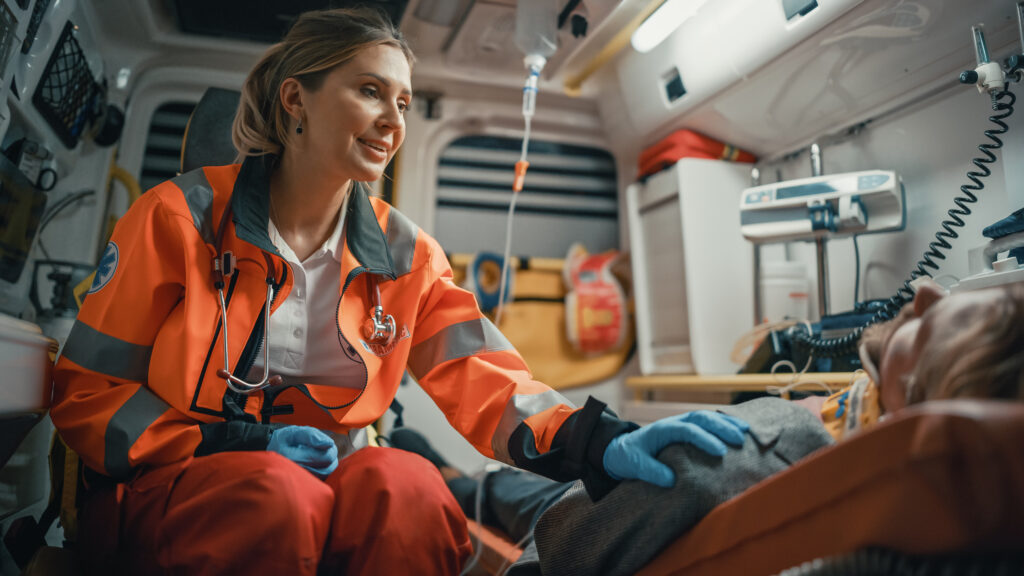
When people think of what makes a great EMS provider, they often picture fast assessments, flawless airway management, strong IV skills, and decisive action under pressure. But medicine is both an art and a science.
Evaluating and providing treatment to patients using evidence-based protocols is science-based. This component of care is stressed in training programs. We all seek to provide a high standard of care.
The art of medicine occurs when we apply clinical judgment to uncertain situations, adapting care to an individual patient, communicating therapeutically, making ethical decisions, and providing comfort even when a cure isn’t possible. In other words, the art of medicine is how we apply medical science to this particular human being in this particular moment.
Clinical empathy is a foundational skill in the art of medicine. It is the ability to understand another person’s emotional state, their perspective, and respond in a compassionate way that conveys understanding and respect. In emergency medical services, kindness is not a “soft” skill or an optional extra.
Compassion is a clinical skill that shapes how patients respond, how scenes unfold, and how effectively care is delivered. For EMS, saving lives does not begin only with oxygen, splints, or defibrillators. It begins with how we treat the person in front of us.
In emergencies, patients are at their most vulnerable: injured, frightened, confused, or in pain. Fear and anxiety trigger physiologic responses that can complicate medical emergencies. Elevated heart rate, increased blood pressure, rapid breathing, and muscle tension can worsen conditions such as chest pain, asthma, and traumatic injuries.
In these situations, patients decide very quickly whether they trust the provider caring for them. This decision can even come from the moment the patient sees the provider walking towards them. Trust determines whether a patient cooperates, shares accurate information, and allows assessment and treatment.
A calm, compassionate EMS provider can help blunt these stress responses. Clear communication, reassurance, and respectful touch can lower anxiety and help patients feel safer. While EMTs may not be able to eliminate pain or fear entirely, they can significantly reduce the emotional distress that worsens medical conditions.
A respectful tone, active listening, and acknowledgment of emotions can prevent confrontations and improve scene safety. In this way, compassion acts as a non-pharmacologic intervention that supports physiologic stability while other treatments are being delivered.
Empathy and compassion can be learned. It is a skill set that must be practiced and improved. Clinicians can practice active listening, using patient-centered language, avoiding judgment or assumptions, explaining procedures carefully, and acknowledging patient emotions such as fear, frustration, or pain.
A compassionate provider uses the patient’s name, asks open-ended questions, listens without interrupting, and validates the patient’s experience, even when symptoms seem minor or familiar. This approach reduces cognitive bias and prevents assumptions that can lead to missed diagnoses.
It turns out that in addition to being essential for patient care, employing empathy and compassion in our work also reduces our risk for burnout. Burnout is a significant problem in EMS, driven by long hours, emotional stress, repeated trauma exposure, and feeling disconnected from purpose.
While compassion fatigue is real, intentional, healthy compassion can actually protect EMS providers from burnout. Burnout feels like, “Nothing I do matters,” but when we work with empathy and compassion, we know “this moment mattered to someone.”
When EMS providers see patients as people rather than problems, they often experience greater meaning in their work. Acts of kindness, however small, can remind providers why they entered EMS in the first place. Compassion fosters connection, and connection helps counter emotional exhaustion. Kindness is good for everyone.
References:
Guidi, C. and Traversa, C. (2021) Empathy in patient care: from ‘Clinical Empathy’ to ‘Empathic Concern’, Medicine, Health Care and Philosophy, 24:10033–4. Available at: https://link.springer.com/content/pdf/10.1007/s11019-021-10033-4.pdf.
Riess, H. (2023) Empathy can be taught and learned with evidence-based education, Emergency Medicine Journal, 39(6), pp. 418–419. Available at: https://emj.bmj.com/content/emermed/39/6/418.full.pdf