
I was seeing a middle-aged tradesman. He told me how he misjudged the last couple of steps of the ladder and ended up dropping onto his right foot with his knee in a fully extended position. He was wearing stiff boots and landed on a concrete floor.
All the force of the fall was transmitted up through his heel bone. Even though it was a relatively short fall, he was unable to walk or even stand up due to the severe pain. He denied any other injury.
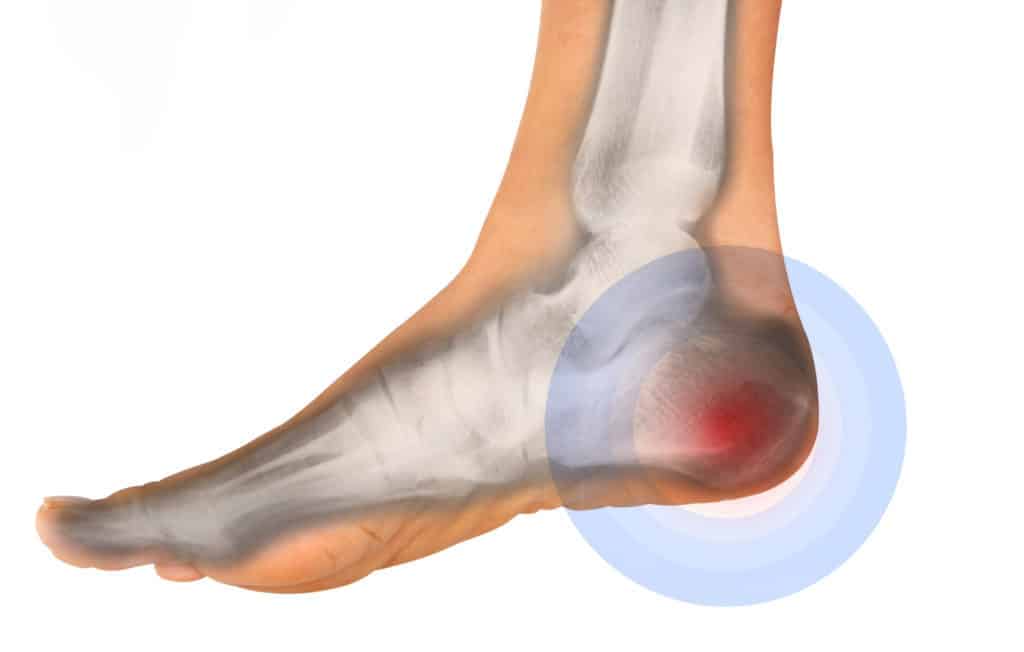
You might be surprised to learn that the calcaneus, or heel bone, fracture can be one of the most devastating orthopedic injuries. Although heel fractures are fairly uncommon, they can result in a very long recovery which may result in a change in occupation. It is not uncommon for a patient to take a year or more to recover from a fractured heel.
Heel fractures result from a sudden and severe axial load applied to the foot, such as a fall or jump from height. I have seen a calcaneal fracture from a fall of as little as three feet, as in the case noted, but more often from a fall of greater height. The higher the fall, the more likely there will also be associated injuries, especially injuries to the lower spine and extremities.
Typically patients with a heel fracture will complain of severe pain and not be able to bear weight on the affected heel. When evaluating these patients, be sure to rule out associated injuries. Ensure, as in all cases of trauma, that ABCs and vitals are normal. Also check CMS to the affected foot and note swelling and tenderness around the area of the heel.
Apply a bulky dressing or pillow to protect the heel on transfer. The foot should be elevated and an ice pack applied to help control pain and swelling.
This patient underwent a CT of his foot which both confirmed the presence of the fracture and demonstrated it was intra-articular involving the subtalar joint. Even though he had appropriate orthopedic management, he had a very prolonged recovery and ended up retraining for a desk job as he was no longer able to be on his feet all day.
All the force of the fall was transmitted up through his heel bone. Even though it was a relatively short fall, he was unable to walk or even stand up due to the severe pain. He denied any other injury.
You might be surprised to learn that the calcaneus, or heel bone, fracture can be one of the most devastating orthopedic injuries. Although heel fractures are fairly uncommon, they can result in a very long recovery which may result in a change in occupation. It is not uncommon for a patient to take a year or more to recover from a fractured heel.
Heel fractures result from a sudden and severe axial load applied to the foot, such as a fall or jump from height. I have seen a calcaneal fracture from a fall of as little as three feet, as in the case noted, but more often from a fall of greater height. The higher the fall, the more likely there will also be associated injuries, especially injuries to the lower spine and extremities.
Typically patients with a heel fracture will complain of severe pain and not be able to bear weight on the affected heel. When evaluating these patients, be sure to rule out associated injuries. Ensure, as in all cases of trauma, that ABCs and vitals are normal. Also check CMS to the affected foot and note swelling and tenderness around the area of the heel.
Apply a bulky dressing or pillow to protect the heel on transfer. The foot should be elevated and an ice pack applied to help control pain and swelling.
This patient underwent a CT of his foot which both confirmed the presence of the fracture and demonstrated it was intra-articular involving the subtalar joint. Even though he had appropriate orthopedic management, he had a very prolonged recovery and ended up retraining for a desk job as he was no longer able to be on his feet all day.