
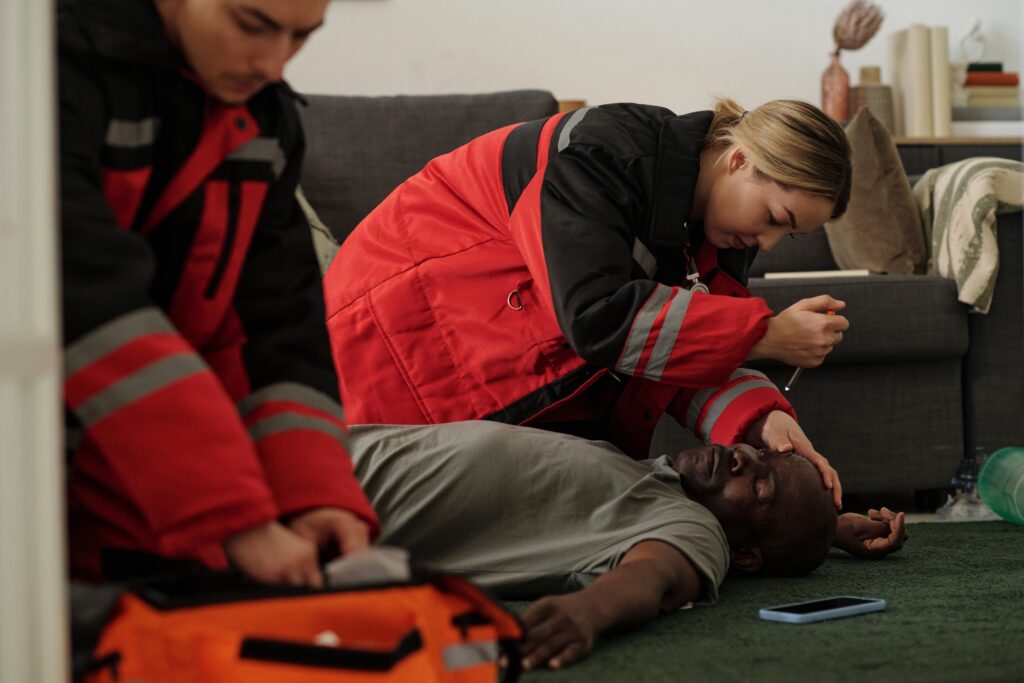
A 78-year-old female was brought to the ER by EMTs. They had been dispatched to the resident’s home for a welfare check. They reported the yard was unkempt, and the mail was piled up. Inside the house, it was unusually warm and had a strong odor of urine. The patient was found lying on the couch, not responding to their entrance.
From across the room, the initial impression is concerning: she did not make eye contact or track the EMTs. Her skin appeared pale and mottled, and her breathing was rapid but shallow. When the EMTs introduced themselves, she opened her eyes briefly but mumbled incoherently.
EMTs must be experts at the primary assessment. The ability to identify sick vs not sick is a critically important skill in patient care. An initial impression is the first thing we do in all patient encounters.
Is what I am seeing normal? This is especially true in pediatrics and the elderly, where the patient might not be able to communicate symptoms. The dispatch reason for the call might not even be what the actual life threat is. For example, an elderly patient who is confused might actually be septic and starting to develop shock.
The assessment starts immediately when you arrive on scene. What do you notice in the environment? For example, does the home appear orderly and clean or chaotic and dirty? Is there an odor of urine, cigarettes, or marijuana? Are there alcohol bottles or drug paraphernalia present? Does the patient live alone or is family present?
Notice what the patient is wearing, their position, and level of consciousness. Did they greet you at the door, or are they lying in bed or on the floor? Are they awake? Do they have visual contact with you? It would be very concerning if the patient is not tracking you. A patient found unconscious indicates a serious problem.
Do you immediately notice any signs of distress? Even from across a room, you will notice any obvious presence of blood. You can also see their skin from across the room. Are they pale, blue, or diaphoretic? All possible indications of a pathological condition.
We approach primary assessment with the ABCs, but remember that an abnormality of airway, breathing, or circulation does not usually exist in isolation. The body is trying to maintain homeostasis, so when there is a problem with one system, there will usually be changes in other systems to compensate in an effort to supply oxygen to vital organs.
A patient with respiratory distress will often have an elevated pulse and skin changes. The heart is beating faster to increase the delivery of blood to vital organs in order to compensate for the decreased oxygen saturation. Likewise, blood may shift from the skin to help perfuse vital organs, resulting in pallor or a blueish color change with result when the hemoglobin molecules are no longer normally saturated.
A patient with a circulation problem will likely have a higher ventilation rate and often skin changes such as pallor and diaphoresis. A patient with a decreased level of consciousness should raise concern for a possible failure of the body to compensate for an ABC abnormality.
As an EMT, the first priority is to recognize a life-threatening problem. EMTs have a treatment for many of these problems.
Next, consider what is causing it. Immediately rule out the causes you can treat. You have treatments for bronchoconstriction, opioid overdose, hypoglycemia, anaphylaxis, and acute coronary syndrome. You focus your history and exam on ruling out those causes first. If you don’t have a specific treatment, then it is supportive care (such as shock treatment) and rapid transport.
In their report, the EMTs also noted the patient’s vitals: BP 88/54, HR 118, RR 28, SpO2 91%. The temperature was 101.2, and her blood sugar was 98. Pupils were of normal size and PEARL. Auscultation of the lungs revealed normal air entry with no adventitious sounds. ALS was unavailable. The EMTs treated the patient for shock and rapidly transported.
In the ER, the patient was found to have septic shock related to a urinary tract infection. Thanks to the EMTs’ rapid recognition and treatment of a life-threatening problem, she arrived in the ER in time for successful treatment of her problem.