
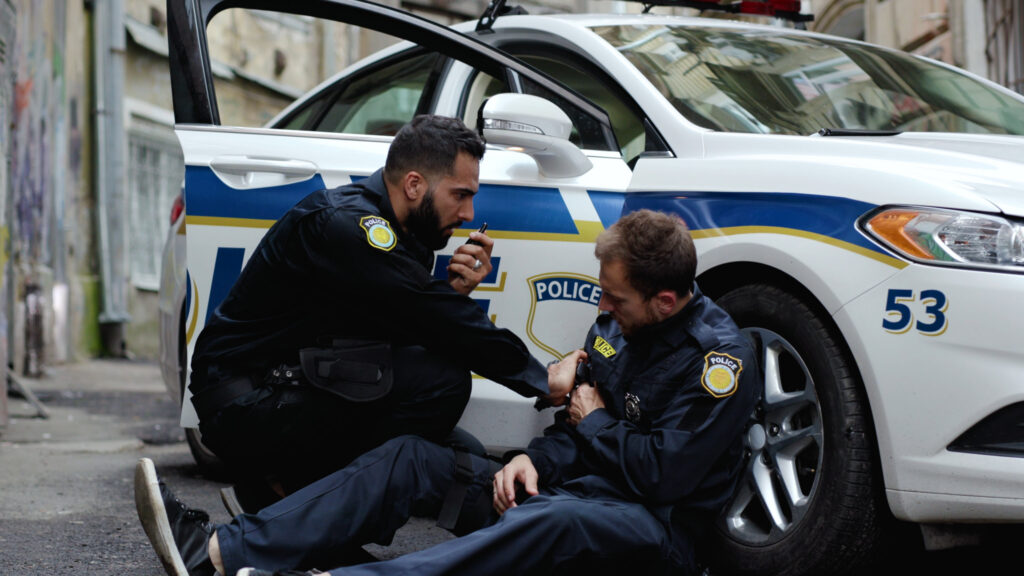
This myth persists in Hollywood movies, and it makes me roll my eyes every time. It is simply not true. In fact, blindly probing a wound in an attempt to find and remove a bullet is far more likely to harm or even kill the patient than help them. The bullet is not the main problem. The damage it caused is.
In a gunshot wound (GSW), a bullet enters the body at high velocity and interacts with tissue over a very short period of time. This creates a permanent cavitation, which is the actual track of destroyed tissue. It also results in a temporary cavitation, a shockwave that stretches and damages surrounding tissue.
Furthermore, the bullet may ricochet or fragment in the body. The result is often significant internal damage that is not visible externally. A small entrance wound does not mean a minor injury.
Gunshot wounds are often less prone to infection than stab wounds, though both should always be treated as contaminated. This is because bullets travel at high speed with brief skin contact time. Also the heat and energy can reduce bacterial load at the entry point of the bullet. Bullets themselves are not sterile, but they are not typically heavily contaminated like knives or tools
That being said, GSWs can absolutely become infected, especially when the bullet passes through dirty clothing or environments, there is extensive tissue destruction or necrosis, or the wound involves the abdomen, particularly with bowel perforation (which carries a very high infection risk).
Infections are managed medically with antibiotics and surgical intervention to repair damaged organs or remove contaminated tissue. Surgeons make a decision to remove a bullet if it is inside a joint, near major blood vessels, nerves, or the spinal cord, causing mechanical problems, or if it is easily accessible during surgery for another reason.
Attempting to locate and remove a bullet in the field is not necessary and dangerous. Probing a wound can disrupt clot formation and worsen bleeding, damage blood vessels, nerves or organs, introduce bacteria and turn a survivable injury into a fatal one.
The priorities in managing a GSW patient are straightforward ABCs management:
Stop life-threatening bleeding by applying direct pressure, tourniquets as necessary
Wound packing with hemostatic impregnated gauze in junctional areas such as the neck, axilla, and groin
Maintain airway and ensure adequate oxygenation and ventilation
Prevent and treat shock and rapidly transport to definitive care.
Hollywood focuses on the bullet, but real medical providers focus on physiology.
Sources and More Information:
Baum, G.R., Baum, J.T., Hayward, D. and MacKay, B.J. (2022) ‘Gunshot wounds: Ballistics, pathology, and treatment recommendations, with a focus on retained bullets’, Orthopedic Research and Reviews, 14, pp. 293–317. doi:10.2147/ORR.S378278. Available from: https://pmc.ncbi.nlm.nih.gov/articles/PMC9462949/
Fulton II MR, Schwartfeger S. EMS Tactical Damage Control Resuscitation Protocol. [Updated 2024 Jan 11]. In: StatPearls [Internet]. Treasure Island (FL): StatPearls Publishing; 2026 Jan-. Available from: https://www.ncbi.nlm.nih.gov/books/NBK599525/.